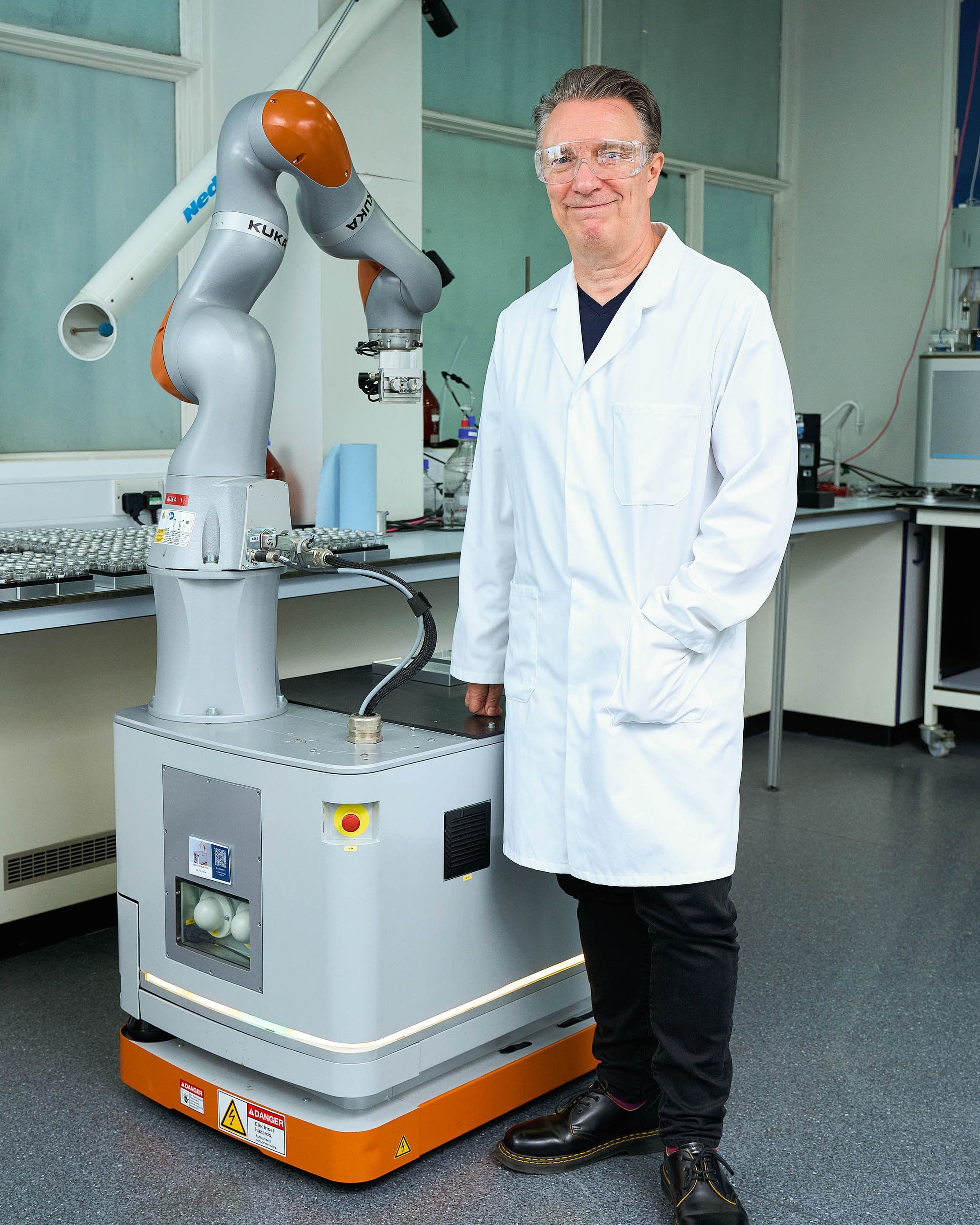
Four 1.75-metres high robots trundle around a chemistry laboratory at Liverpool university, conveying materials between automated workstations where reactions take place and products are analysed. Their movement is dictated by an artificial intelligence system that decides how to proceed as new results emerge — even during the night when no human chemists are present.
Andy Cooper, Liverpool chemistry professor, started to introduce robotics to his lab 10 years ago and published pioneering papers in Nature in 2020 and 2024 that demonstrated how effectively AI-driven robotics can improve productivity. “At three in the morning the robot will have done 50 experiments, it’s got new data and at 3.01am it can decide what to do next while everyone’s asleep,” he says.